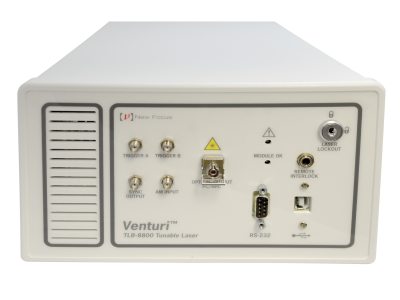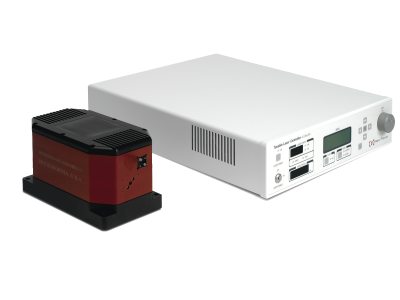
Velocity 波長可変外部共振器ダイオードレーザー
Velocity 波長可変外部共振器ダイオードレーザー
Velocityは、幅広い波長スキャンと細かい波長スキャンの両方を可能とし、当社の最高のチューナブルダイオードレーザーシステムです。レーザーキャビティーは、耐衝撃性であり、アクティブ温度制御により断熱され、弊社独自のマグネティックダンピング技術を導入し、より高い出力、安定性、狭い線幅を実現します。
- モードホップフリーワイドチューニング
- 耐衝撃性と断熱性のハウジングとマグネティックダンピング技術による
優れた安定性 - 強固で恒久的なファイバーカップリングオプション
- 容易な波長制御 すべての機能を見る
アプリケーション
- 量子物理学
- マイクロキャビティ型共振器
- 量子ドット
- 分光法
仕様
Specifications1
| Model | Mode-Hop Free Tuning Range2 (Wide) |
Mode-Hope Free Tuning Range (Fine) |
Free-Space Output Power |
Fiber-Coupled Output Power |
Maximum Tuning Speed |
|---|---|---|---|---|---|
| TLB-6704 | 635-638 nm | >80 GHz (110 pm) | 8 mW @ 638 nm | 2.5 mW @ 638 nm | 5 nm/s |
| TLB-6712 | 765-781 nm | >80 GHz (150 pm) | 50 mW @ 780 nm | 25 mW @ 780 nm | 8 nm/s |
| TLB-6713 | 795-810 nm | >80 GHz (150 pm) | 20 mW @ 795 nm | 10 mW @ 795 nm | 8 nm/s |
| TLB-6716 | 830-853 nm | >60 GHz (150 pm) | 50 mW @ 850 nm | 15 mW @ 850 nm | 10 nm/s |
| TLB-6718 | 890-940 nm | >50 GHz (160 pm) | 15 mW @ 890 nm | 5 mW @ 890 nm | 10 nm/s |
| TLB-6719 | 940-975 nm | >50 GHz (180 pm) | 40 mW @ 975 nm | 15 mW @ 975 nm | 10 nm/s |
| TLB-6721 | 1030-1070 nm | >50 GHz (200 pm) | 60 mW @ 1064 nm | 20 mW @ 1064 nm | 10 nm/s |
| TLB-6722 | 1045-1085 nm | >50 GHz (200 pm) | 40 mW @ 1080 nm | 14 mW @ 1080 nm | 10 nm/s |
| TLB-6723 | 1070-1130 nm | >50 GHz (200 pm) | 30 mW @ 1110 nm | 10 mW @ 1110 nm | 10 nm/s |
| TLB-6724*** | 1270-1330 nm | >50 GHz (280 pm) | 30 mW @ 1300 nm | 15 mW @ 1300 nm | 15 nm/s |
| TLB-6725*** | 1390-1470 nm | >30 GHz (200 pm) | 45 mW @ 1450 nm | 22.5 mW @ 1450 nm | 15 nm/s |
| TLB-6726*** | 1420-1500 nm | >30 GHz (210 pm) | 20 mW @ 1480 nm | 10 mW @ 1480 nm | 15 nm/s |
| TLB-6728*** | 1520-1570 nm | >30 GHz (240 pm) | 30 mW @ 1550 nm | 15 mW @ 1550 nm | 20 nm/s |
| TLB-6730 | 1550-1630 nm | >30 GHz (260 pm) | 30 mW @ 1600 nm | 15 mW @ 1600 nm | 20 nm/s |
| TLB-6732 | 1700-1800 nm | >20 GHz (260 pm) | 10 mW @ 1780 nm | ** | 20 nm/s |
| TLB-6736* | 1975-2075 nm | >20 GHz (260 pm) | 2 mW @ 2030 nm | ** | 20 nm/s |
| TLB-6740* | 2350-2450 nm | >20 GHz (360 pm) | 4 mW @ 2400 nm | ** | 20 nm/s |
* Constant current mode only.
** Contact Sales for more information.
*** Contact factory for extended tuning range option.
Value
| Value | |
|---|---|
| Linewidth | <200 kHz (50 ms integration time) ;< 2.5 kHz (5 µs) |
| Wavelength Stability | 2 pm (over 1 hour ±2°C) |
| Power Stability | <1% (over 1 hour ±2°C) |
| Wide Tuning Resolution | 10 pm |
| Fine Tuning Resolution3 | 0.01% of full PZT tuning range |
| Fine-Frequency Modulation Bandwidth | >100 Hz (100% amplitude) 2 kHz (20% amplitude) |
| Current Modulation Bandwidth | DC-1 MHz (through controller) 50 kHz-100 MHz (directly to diode)4 |
| Longitudinal Mode | Single |
| Transverse Mode | TEM00 |
| Beam Pointing Stability | <50 µrad (±2°C) |
| Beam Size, typical | 1-2 mm |
| Beam Ellipticity, typical | 1:1-2:1 |
| Polarization5 | Vertical |
| Optical Output6 | Free-space, optically-isolated, fiber-coupled |
| User Interface | Controller front panel, USB |
| Power Supply Requirement | 100-240 VAC (50-60 Hz), power consumption < 170 W |
| Environment Temperature, operating | 15-30°C |
| Environment Temperature, storage | 0-50°C |
| Environment Humidity | Non-condensing |
Footnotes:
- Due to our continuous product improvement program, specifications are subject to change without notice.
- Motorized wide tuning and PZT fine tuning. Contact us for other available wavelengths and typical tuning curves. Wide tuning is mode-hope-free in constant current mode only.
- Resolution is 10 mV in PZT (0.01% of full PZT tuning range) through controller front panel or command interface. When tuning PZT using an external voltage source through External Frequency Modulation input, resolution is dependent on voltage source.
- Current modulation directly to diode through laser head SMA port.
- Free space (with and without isolator) output is vertically linearly polarized with respect to laser head base.
- Optically-isolated option includes an integrated 35 dB optical isolator for free-space output with approximately 75% power transmission. Fiber-coupled option includes isolator and permanently fixed Panda-type PM fiber with FC/APC connector for laser output. Wide-type alignment key aligned with the slow axis of the PM fiber. Dual stage isolation, other fiber types and connectors available upon request. Optically-isolated option for TLB-6732 available upon request. Fiber coupled option for TLB-6732, TLB-6736, and TLB-6740 available upon request.
- Constant current mode only
- Contact sales for more information
- TypeExternal Cavity Diode Laser
- 波長Tunable
- パルス幅CW/Quasi CW
- WavelengthFor tuning ranges see specifications
- Process TypeSpectroscopy
機能
広範囲に渡る波長選択

New Focus Velocityは、UVから中赤外までの波長が用意されています
線幅:ヘテロダインビートノート方式
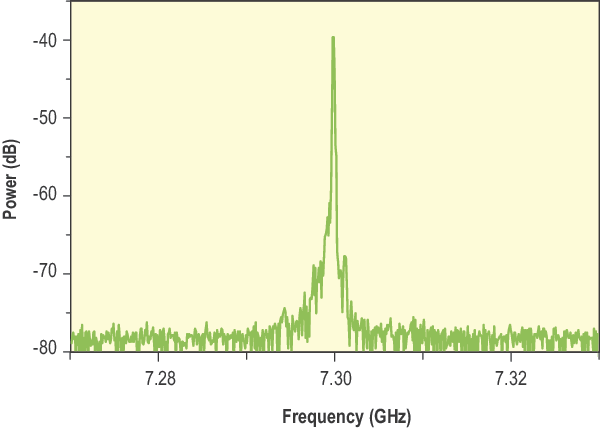
歴史的に線幅は、近接波長を持つ2つのECDLをヘテロダインビートノート法を使用して、50ミリ秒以上の積分時間にわたって測定されます。この方法は、測定装置の依存度が低く、スペクトルの広がりの真のスナップショットを得られます。
線幅:遅延セルフビートノート方式
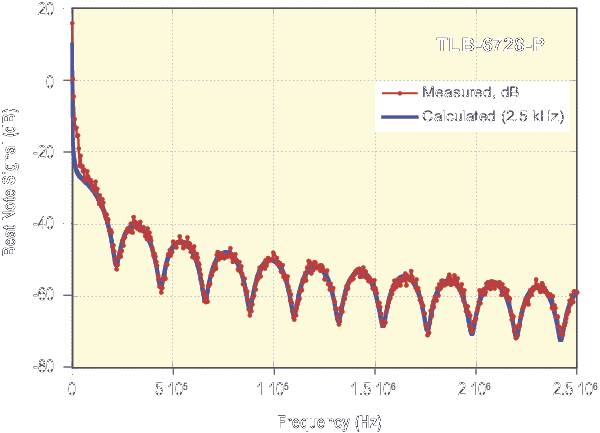
遅延セルフビートノート法は、もう1つの線幅測定手法です。この手法はスペクトルの広がりを除外しますが、ローレンツスペクトルの瞬間的なスナップショットが得られます。New Focus Velocityレーザーは、遅延4.6 µs測定で2.5kHzを測定します。
互換性のあるパワーセンサー
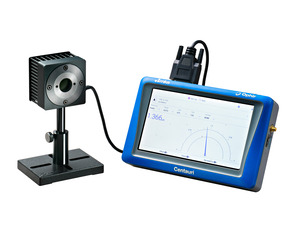
Velocityレーザーのパワーを検証および分析するには、Ophir PD300 (7Z02410), PD300-IR (7Z02412) または 3A (7Z02621) サーマル センサーおよび Centauri レーザーパワーメーターをお勧めします。このレーザー測定装置に関する追加情報は、ophiropt.com の Web サイトでご確認いただけます。アプリケーションによっては、他の Ophir センサーとディスプレイも Velocity に適している場合があります。 また、 Ophir はレーザーシステム開発者と協力し、OEM ソリューションとしてシステムパフォーマンスをモニターする組み込み型ビームプロファイリングを可能にしています。
リソース
Literature
CW Tunable Lasers Brochure(3.8 MB, PDF) Ultrafast Lasers Brochure(4.6 MB, PDF) フォトニクスベースの量子テクノロジー研究の推進(7.3 MB, PDF)
Data Sheets
Velocity Datasheet(640.1 kB, PDF)